
How to Pick a Top Agency Next Time
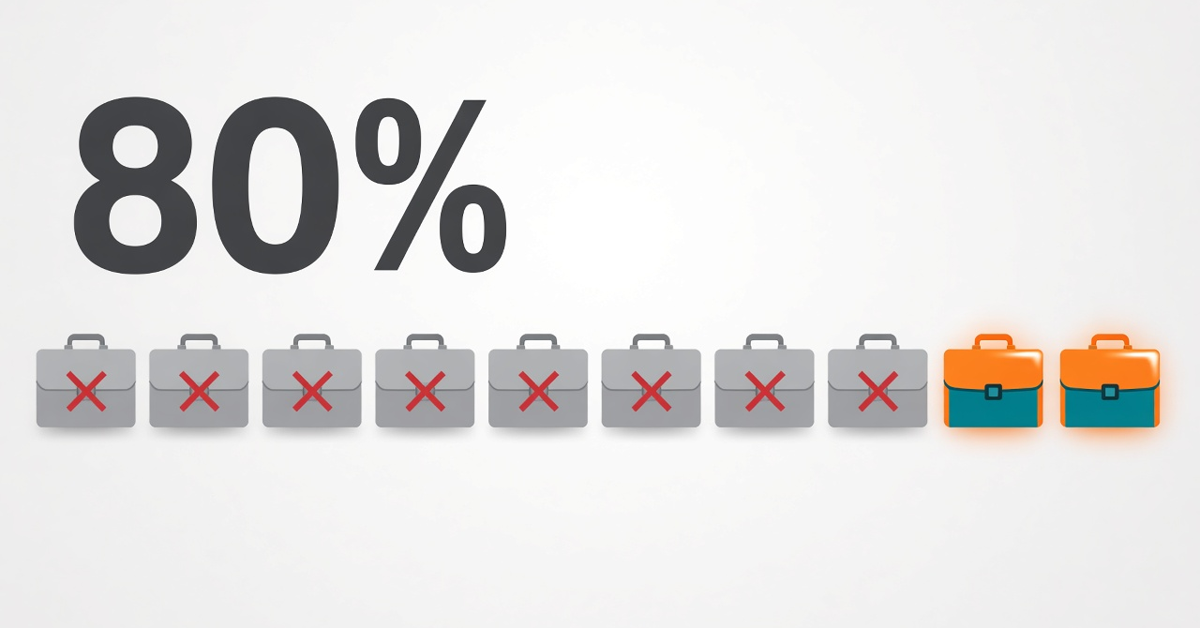
I’ve been buying paid search/social traffic for a living since 2008. Unpopular truth: 80% of agencies selling digital ads management are reliably bad at it. That’s at fees of $2k/mo and up.
As the fees go lower ($1k, $500, even $300/mo), so do the odds that an experienced, trustworthy, competent person is responsibly trading your money for traffic. Low fee agencies are often incompetent, dishonest, or both.
The hardest part isn’t that bad agencies exist. It’s that you can’t easily tell good shops from bad ones by their sales team, website, or pitch deck. Pitching like you know what you’re doing is easy. Running an account, landing page testing plan, building creative assets, and collecting/passing data well enough to be profitable is not.
Here’s how we’d vet an agency from your side of the table.
Vetting
1. Do They Have Happy Clients?
Ask to talk to a current client. Website logos are often gross exaggerations at best. There’s a balance between transparency for prospects and privacy for existing clients. It’s not reasonable to expect an hour zoom with each of their clients, but a quick reality check with at least one happy client never hurts.
Be wary of big promises. Guarantees almost always mean shenanigans will follow. Nobody honest can guarantee results on an auction they don’t control. Our guarantee is that we’ll use our simple, not easy, system to promote your business to high intent audiences. This process has a high probability of success, but no system achieves the business goal in 100% of cases.
2. Do They Have Clear, Professional Statements of Work and Onboarding Documents?
Before work starts, a good agency puts in writing what’s included, what’s not, the level of effort, and the price. We e-sign a statement of work with every client before making any ads account changes. Onboarding should feel like a process, not a vibe. Expect questions about access, billing, conversion tracking, your CRM, what a qualified lead looks like, and who on your team closes deals. If the agency can’t produce a clean contract and SOW, ask yourself how organized your campaigns will be.
3. Do Their Proposed Tactics Line Up With Current Tech?
Google Ads in 2026 isn’t Google Ads in 2016, and Meta and YouTube have changed just as much. Search is still the core for most advertisers; the best shops add YouTube and Meta to complement it, not replace it. A good proposal should cover:
- Conversion tracking that goes past the form fill. Server-side tracking, offline conversion imports, and passing qualified-lead and closed-won data to Google and Meta so the algorithm learns who your real customers are.
- Cutting junk traffic. Display and Search Partners send a lot of bot clicks. If the plan is “turn on Performance Max and let Google figure it out,” that plan will work great for Google shareholders, but not so much for your marketing goals.
- Supervised automation. AI bidding is useful when it’s fed good data and an experienced human watches it. Unwatched, it can act like a petulant child, or worse.
- Short-form vertical video. On YouTube and Meta, creative does much of the heavy lifting, and vertical video is king. A good social plan is built around short videos made for phones, not resized banner ads or recycled TV spots.
- Judging social by leads and revenue. Views, likes, and cheap clicks are easy to buy on YouTube and Meta. They make a nice report, but they don’t pay your bills. Hold social to the same standard as search: qualified leads, closed deals, and revenue.
If they pitch an IP blocker as the click fraud fix, auto-apply recommendations as optimization, or a social plan that reports views instead of leads, keep shopping.
Own Your Account
1. Pay Your Own Ad Costs Directly
Your credit card should be on file with Google, Meta, or whatever platform you buy from, and the agency should invoice its fee separately. That’s how we set up every client.
When the agency pays the platform and bills you back, it’s easy to blur how much went to Google or Meta and how much to the agency. Traditional media calls it “grossing up.” It isn’t always unethical, but it invites a lot more opportunity for dishonesty.
2. Have Admin Access to Your Account. But do not play with your campaigns
You should own your account, with admin access to both the campaigns and the billing profile. That includes your Google Ads account (which runs your YouTube ads too), the YouTube channel your video ads live on, and your Meta ad account. If you part ways with the agency, you take the accounts, history, and data with you. Be extremely skeptical of any agency that won’t let you see your own account.
Important Caveat: Admin access is an insurance policy, not a steering wheel. Every new client gets the same lecture: never make any changes to your account. Want a change? Ask us and we’ll make it. This keeps us solely responsible for your account’s performance and ensures there’s no blame game over whose change tanked it.
3. Be Ready to Help With Advertiser Verification and Sensitive Category Approval
Some verification steps can only be done by an internal employee or officer. Google and Meta verify the business behind the account, not the agency: your legal business name, documents, sometimes your ID, and sometimes a video call with the owner. In healthcare, legal, financial services, addiction treatment, or another restricted category, expect extra certifications and paperwork.
A good agency tells you what’s coming, prepares you, and handles everything it can. But when Google asks for your business license, your agency often can’t upload it for you. Answer quickly and get it right the first time. A sloppy verification can get the account suspended, sometimes permanently. Respond slowly, and your ads could sit dark while competitors keep running.
Pricing Structure
PPC Better generally works on a retainer, a commission, or a retainer plus commission. Each has tradeoffs worth understanding before you sign anything.
Flat Retainer: Simple, but No Reason to Grow You
Retainers are predictable, and most clients prefer a flat fee these days. The downside is incentives: the agency’s incentive is to do just enough to keep you while keeping its costs down. Nothing in the deal rewards it for growing your revenue.
Commission: Aligned, if They Can Prove It
Commission, usually tied to ad spend, can better align incentives. As your account grows profitably, the agency earns more, so both sides want your business to make more money.
But commission only aligns incentives if the agency can show real revenue impact at the bottom of the funnel: tracking leads to qualified and closed-won, not just counting form fills, clicks, and views. If an agency on commission can’t show which ad dollars turned into revenue, all it’s proven is that it can spend more of your money.
Pure Performance Deals: They Sound Great, but Rarely Live Up to the Hype
Pay per lead, pay per sale, percentage of revenue, commission-only. They all sound like you can’t lose. Here’s what actually happens:
- Pay per lead turns into a fight about definitions. You’ll argue endlessly about what counts as “unqualified” or “out of service area.”
- Revenue share turns into a fight about the books. Cancellations, slow-paying clients, refunds. Clients under-report sales, and the agency stops trusting the numbers it gets paid on.
- Success breaks the deal too. Either the marketer can’t sell anything and nobody’s happy, or the marketer runs up the scoreboard and the owner decides “I’m paying this agency way too much” and blows it up. These deals almost never end with both sides happy.
- You pay more for the same work. If two agencies are equally good, the retainer one will be cheaper than the performance-only one. The performance agency prices in the risk that your team won’t perform. So if your sales team is on point, you’re paying a risk premium to cover the agency’s lower performing clients.
- It filters out the best agencies. The best shops have extensive track records, a flow of referrals, and don’t need to pitch “it’s free unless you sell stuff.” None of them will take commission only clients.
Want protection from bad performance? Set clear cost per lead or return on ad spend targets. If the agency misses them, fire it. And if you can’t afford roughly 90 days of ad spend plus fees without real results, you’re not ready to advertise yet.
Hope that helps you land in the top 20% of advertisers next quarter!
If you’d like to see whether PPC Better is a fit to help you run a profitable Google Ads and Meta Ads campaign, book a discovery call.